Tracking shots are a question of morality.” This was Jean Luc Godard’s response to a shot in the film Kapo, in which the viewer is brought up close to the body of a Holocaust victim who has just killed herself on an electric fence. He is pointing out that although technology makes this shot possible, it is a perspective that is not human(e). All technologies have the potential to alter how humans perceive, organize, and value their world. One of these, virtual reality (VR), is especially effective in increasing empathy. Whether or not virtual production methods might also be used as a “moral” agent in filmmaking is yet to be determined.Meant to provoke discourse and encourage future artistic and scientific experimentation, this paper describes the artistic process behind creating our 2D short film, Fly Angel Soul shot entirely in a responsive virtual mis-en-scene utilizing three types of virtual cameras: a fly, an angel, and a human/soul, each of which sees and moves differently. We created a novel cinematic language at the intersection of theater, film, and video games. Our intention was to heighten empathy for the main character, Sebastian, a gay man who, having lived a peripatetic life, receives a diagnosis of AIDS in Mali at the beginning of the epidemic. At the same time, the film offers viewers the opportunity to consider their own embodied (and mortal) state. To contextualize the hypothetical potential for a VR-informed cinematic language to promote empathy, we also review key philosophical and neuropsychological bases for VR’s pro-social effects and the neuropsychological bases for empathy in film. We suggest that cinema informed by spatial computing might also allow audiences to experiment with and rehearse new pro-social forms of embodiment and new ways of relating in our computer-mediated world. https://revistas-fonseca.com/index.php/2172-9077
“Kitsch is these scattered fragments of the aura, traces of dream images turned loose from their matrix…covering the emptiness left both by the aura’s demise and modernity’s failure to deliver its promise of a radiant future.”
Celeste Olalquiaga, The Artificial Kingdom: on the Kitsch Experience
In 2011, I went to North Korea. for an art project. (Atomic Vacation, a project that it will probably never see the light of day, unfortunately.) The DPRK was the kitschiest place I have ever been. It’s also the most quietly terrifying. In North Korea, aesthetic codes take the place of historical realities. A doric column in a provincial hotel lobby is an enduring and universal symbol of authority and prestige. The rococo gilt cherub chandelier in the same hotel lobby is less a functional light fixture than a vehicle for “taste” and wealth. Displaced from lived durational time and their countries of origin, these objects function as souvenirs of reality. They are kitsch.
In this essay, I will argue that the turn toward kitsch in NFTs and generative AI is related to four convergent trends:
The creation of digital tools and networks of distribution that allow and encourage infinite replication and iteration, resulting in a massive acceleration in the rate of unstructured information created, copied, and consumed. The effects of information theory as defined by Claude Shannon in which “information” is unrelated to the meaning, structure or content of individual messages. The privileging of affect/effect over complex meaning-making. The privileging of machine-based procedural logic and physics over those related to the time and space of living bodies.
Moreover, I will suggest that all these contribute to a novel relationship to what Benjamin calls the “aura”— the transcendent potential of an artwork. I will show that the aura, which began to dim with the industrial revolution and mass production of objects, returns, in NFTs and AI art, in a machine-mediated fashion. For NFTs, the aura returns in a purely formal way via the blockchain. With AI artworks, the aura is approximated not by a singular work, but by the supernatural volume of unique objects which an AI produces in response to a single prompt.
In his essay, “The Work of Art in the Age of Mechanical Reproduction,” Walter Benjamin links the “aura” of an artwork to its original sacred use as a ritual object and to its “authenticity.”
“The authenticity of a thing is the essence of all that is transmissible from its beginning, ranging from its substantive duration to its testimony to the history which it has experienced. Since the historical testimony rests on the authenticity, the former, too, is jeopardized by reproduction when substantive duration ceases to matter. And what is really jeopardized when the historical testimony is affected is the authority of the object.”
Within Benjamin’s framework, NFTs, which usually reference an infinitely reproducible digital file of visual image or sound, might appear to be devoid of aura. But, this is not so. Because an NFT is “non-fungible,” it is also unique. No complex, historically nuanced, provenance is required. Instead, “blockchain, a shared, immutable ledger that facilitates the process of recording transactions and tracking assets in a business network” https://www.ibm.com/topics/what-is-blockchain (accessed 8/30/22) guarantees an NFT’s “authenticity.” Since there is nothing that prevents an NFT’s content from being duplicated to create another unique and authentic NFT, the content authenticity relates to ownership, the transfer of which is fossilized, kept as a permanent memory via the blockchain. Thus, although timeless, NFTs are born and “have a life” marked purely by ownership. Duration returns to the work of art via the operation of blockchain and capitalist exchange. The aura, emptied of human-centric meaning, returns as pure computer code.
Philosopher Villem Flusser defines code as “a sign system arranged in a regular pattern.” (Flusser pg 83 Toward a Philosophy of Photography). He suggests that every medium has its own system of signs (code) where a sign is “a phenomenon that signifies another” (pg 84) NFTs as a medium employ the blockchain as a system of signs, a code, which signifies a reality that is entirely self-referential and meaningful only in terms of capitalist exchange.
AI as a medium employs a code that signifies via repetition and iteration. Here, the aura of an artwork, the ineffable process of human creation is approximated through scale. Transcendence manifests, not through content, but as a side effect of the supernatural quantity of unique artworks spit out by the AI. In the face of this, curating becomes an act by which the artist attempts to recoup creative power. However, since the productive power can not be reclaimed from the machine entirely, AI artists augment this by playing along with the rules of the medium— privileging quantity, e.g. in the form of likes on Instagram, and sales, over quality.
In System and Structure: Essays In Communication and Exchange, Anthony Wilden likens the process of going from analog to digital to the solidification of difference into distinction. AI art is difference without distinction. It approximates depth of meaning by manifesting potentially infinite variety, that is to say entropy as it was defined by Claude Shannon. “Shannon’s theory defines information as a probability function with no dimension, no materiality, and no necessary connection with meaning. It is a pattern not a presence.” Hayles, How We Became Posthuman. This is contra the definition suggested during the Macy Conferences by physicist Donald MacKay that the quantity of information contained in a message ought to depend on the functional impact on a perceiving subject: “information is a distinction that makes a difference.” (Information, Mechanism, and Meaning) MacKay argued that meaning acts as an organization function for a perceiving subject. Thus, Shannon’s definition while mathematical and machine-readable was applicable only to telecommunications not to living organisms.
Does this machine-mediated return of the aura necessarily mean that NFTs and AI art are doomed to be kitsch? Not necessarily, however, in general one might argue that this is a predictable result of the way digital apparatuses function. Flusser defines an apparatus as “a plaything or game that simulates thought [trans. An overarching term for a non-human agency, e.g. the camera, the computer and the ‘apparatus’ of the State or of the market] ; organization or system that enables something to function.”
In his essay, “Towards a Philosophy of Photography,” Flusser describes the way that “technical” images, those produced by an apparatus, operate. No longer used for orientating human minds in a world of infinite data, that, in toto, would be and is beyond the limits of human understanding, these technical images distill the complexity of reality, becoming substitutes for reality itself.
“The technical images currently all around us are in the process of magically restructuring our ‘reality’ and turning it into a ‘global image scenario’. Essentially this is a question of ‘amnesia’. Human beings forget they created the images in order to orientate themselves in the world. Since they are no longer able to decode them, their lives become a function of their own images: Imagination has turned into hallucination.” Flusser, pg. 10.
In such a hallucinatory world, disorientation is expected. Indeed, I suggest that the repetition compulsion which is fundamental logic in the process of art-making with AI, one which mirrors our constant swiping, tweeting, checking of emails and messages, points to a desperate attempt to dissipate the tension of this disorientation. In a world where the image has become the world, the predictable rules of the material world: the law of gravity and Newton’s Second Law of Motion are replaced by aesthetic rules. To function with the authority of “laws”, these codes must be familiar as gravity, legible to all, and create a consistent emotional engagement. This may be the real answer NFTs and AI lean toward kitsch—kitsch distracts from the void, the constant whisperings of our imminent erasure as humans by machines (AI, nuclear weapons, social media), climate change, and disease, which results in a general feeling of dis-ease Thus, it is not surprising that the aesthetics of the most salable AI and NFT images (bored apes) are kitsch.
What is the simulation of thought, apparatus, involved in making NFT’s? What is the simulation of thought, apparatus, involved in making an AI artwork? To answer these questions, we might, like Flusser, examine the act of making in terms of gesture.
Flusser describes gesture as “a movement of the body or of a tool connected to the body for which there is no satisfactory causal explanation.” In other words, a gesture is the expression of a particular form of consciousness.
“If I accept that affect is a state of mind transformed into gesticulation, my primary interest is no longer in the state of mind but in the effect of the gesture. As they appear in symptoms and as I experience them through introspection, states of mind throw up ethical and epistemological problems. Affect, conversely, presents formal, aesthetic problems. Affect releases states of mind from their original contexts and allows them to become formal (aesthetic)—to take the form of gestures. They become “artificial.”
What then is the gesture of NFT’s? I will argue that it takes the form of a pointing to something in the distance, something that is so far away and growing more distant in time and space that it is barely seen or remembered. What NFT’s point toward is the loss of a shared human reality or rather our shared illusion of human community, a “brotherhood of man,” which would render blockchain encoding of authenticity unnecessary.
The gesture of AI relates to a translation of human creativity, freedom of thought, into mechanical creativity and freedom of choice. In other words, it distills human freedom into the consumerist logic of capitalism. As suggested earlier, another way to think of the gesture of AI is repetition compulsion, which Freud defined as “an urge inherent in organic life to restore an earlier state of things.” Interestingly, Olalquigia suggests that loss is an integral aspect of kitsch: “the pieces of the aura were put up for sale and personal possession became the medium for a fetishized experience of loss.”
One tactic that artists using AI have employed to resist the artist as consumer logic is to add the mystery of materiality back to the process of art making. In the sculptures of Sharan Elran and collaborators (http://www.sharanism.com/#/fine-motor-skills/) clay unmakes the ease of obtaining preprogrammed surface effects. Earth itself acts as a carrier of the traces of time passing where moisture, temperature, and other factors create the possibility of “mistake” and suddenly the machine stops. (See E. M. Forster “The Machine Stops”)
To further evaluate the reasons AI and NFT’s lean toward kitsch, we must make a distinction between kitsch and art.
Flusser suggests that all gestures are aesthetic in nature, and can not be judged as “true” or “false,” but only as art or kitsch. For Flusser, “the more information a gesture contains, the less it is like kitsch, and furthermore, that the quantity of information conveyed by the gesture is related to the gesture’s code.”
If we take Shannon’s winning definition as information being related to entropy, kitsch operates as kitsch because of its predictability. In a time of disorientation and chaos, kitsch is the toss of a two headed coin. Indeed, compared to the rich history of provenance, how much information does the gesture of blockchain contain? The answer is that, a single block in the bitcoin blockchain is about 1MB. At the level of human meaning, very little, at the level of Shannon’s purely mathematical quantification, the procedural logic of NFT’s is intrinsically kitsch.
The kitschiness of AI art may relate to the fact that most AI learn from data sets. They do not learn as humans do by moving through and interacting with the physical world. Human minds are messy because bodies are messy. Although it is beyond the scope of this essay to discuss embodied cognition and AI, I suggest that AI art reflects a loss of embodied existence and a physical world as opposed to a world constructed of text and images.
Importantly, kitsch does not have as much to do with content but, in how that content is consumed. Clement Greenberg in his famous 1939 essay “Kitsch and the Avant-Garde” suggests that “kitsch pretends to demand nothing of its customers except their money-not even their time.” Moreover, he suggests that the basis for kitsch is the same as for the avant-garde: “The precondition for kitsch, a condition without which kitsch would be impossible, is the availability close at hand of a fully matured cultural tradition, whose discoveries, acquisitions, and perfected self-consciousness kitsch can take advantage of for its own ends.”
The difference between the avant-garde and kitsch with respect to aesthetics lies in a privileging of “form” over content. Boris Groys quoting Greenberg, is instructive. “Greenberg defines the avant-garde as mimesis of mimesis: the avant-garde reproduces the artistic form of traditional painting instead of reproducing its content.” from https://www.radicalphilosophy.com/article/romantic-bureaucracy-2″
With this reasoning, one could make the argument that the mechanical, purely formal return of the aura that occurs with NFTs is an instance of the avant-garde. It is. One might insist that the hollowness and superficiality of most NFT content is a tacit acknowledgment of this, but, I don’t think it is. The fact is that kitsch has become rife in other digital media as well, especially AI art.
I suspect that the proliferation of kitsch has to do with a digitally-morphed perception of time and space and also to a change in social relations wherein the reproduced object becomes the medium via which, increasingly, especially during covid times, social interaction occurs. In digital media, the decay of an image that occurs with the transfer of data does not adhere to the image like a patina of time. For the digital image, this degradation exists only as mistake, as loss of data, or obsolesce. It is not productive. Similarly, in digital existence, site is replaced by a mobile and infinitely reproducible screen. A classic example of this is the Tuscan villa demo which came with the original developer kit for Oculus Rift, now close to a decade ago. This early “consumer” VR experience offers users the chance to meander through a country villa and surrounding landscape. A generic-looking computer-generated farmhouse, its stones visually coded as “old,” suffices to invoke a nostalgic memory—one that will be even more poignant and believable to a viewer who has never actually stayed in a Tuscan villa. In other words, the Tuscan villa is meant to exist outside of history. In this work, the visual and auditory codes are perceived as “authentic” if they successfully activate a process of false memory and effect a change in the viewer’s affective state. In the case of the Tuscan Villa, the image of the villa no longer serves an indexical function vis a vis reality, but rather, it registers the trace of a shared cinematic memory. The kitsch experience of the villa and garden offers a momentary illusion or simulacrum of “realness”. For this, it sacrifices the passage of time and complexity of meaning.
The opposite of kitsch is ambiguity, contradiction, dis-ease, in a word, the real. What is the real? It is an aesthetic experience as much as any artwork, however, in the real, we have a body that exists in time and space. This body is the foundation for the development of human consciousness over millions of years of evolution. Both body and consciousness can be extended through technology, but, for most of us, reality becomes non-fungible (the NF in NFT) when we face death.
Dis-ease is meaningful, not just because of Covid. Because we feel it in ourselves, it takes us beyond our skin. Or, to quote the Russian Futurist poet, Vladimir Mayakovsky, who worked in both kitsch and art, “ I feel my ‘I’ is much too small for me. Stubbornly a body pushes out of me.”
Clement Greenberg talks about this action of going beyond self in both time and space as the difference between art and kitsch.
“But the ultimate values which the cultivated spectator derives from Picasso are derived at a second remove, as the result of reflection upon the immediate impression left by the plastic values. It is only then that the recognizable, the miraculous and the sympathetic enter. They are not immediately or externally present in Picasso’s painting, but must be projected into it by the spectator sensitive enough to react sufficiently to plastic qualities. They belong to the “reflected” effect. In Repin, on the other hand, the “reflected” effect has already been included in the picture, ready for the spectator’s unreflective enjoyment. Where Picasso paints cause, Repin paints effect.”
Here, the two ideas to understand are that art happens in a potential space. The work itself creates a Brechtian distancing effect which allows for a circulation of ideas and feeling between artwork and viewer. Art acts as a catalyst for something that is more than itself. The artwork is fundamentally this emergent entity, not the object itself. With kitsch, the effect/affect is held close to the work of art, it is contained in the work of art itself. The work of art is a dead end.
Benjamin writes about this change in the spatial relationship between art to the viewer. For him, the social basis for the “decay of the aura… rests on two circumstances, both of which are related to the increasing significance of the masses in contemporary life. Namely, the desire of contemporary masses to bring things ‘closer’ spatially and humanly, which is just as ardent as their bent toward overcoming the uniqueness of every reality by accepting its reproduction.” It is understandable, then, why NFT’s are kept in a wallet. What could be closer to the heart than that?
In the case of most NFTs and AI art the effect/affect contained is, in a word, literally one word, most often a word like “awesome,” or, even better, wordless—a heart emoji or thumbs up like. Disconnected to time or space, there is no way to navigate or orient. With NFTs and AI art, we are stuck in “wow” contemplation of the void. This is why kitsch is so easily and rapidly consumed. It is self-contained like a potato chip and fills you up for a moment, then leaves you feeling kind of yucky and empty. Kitsch is food for disembodied beings. Kitsch creates affect that is only gestured towards because it speaks to us in a state of disembodiment, disconnected both from lived time as well as myth. Kitsch will never invoke a state of awe, only ever a state of “cool”. The social milieu of such states is not that of shared ritual but of what Milan Kundera referred to as “the second tear.”
“Kitsch causes two tears to flow in quick succession. The first tear says: How nice to see children running on the grass! The second tear says: How nice to be moved, together with all mankind, by children running on the grass! It is the second tear that makes kitsch kitsch. The brotherhood of man on earth will be possible on a basis of kitsch.”
Kundera’s second tear is important because it links kitsch to social unity. Politically, kitsch and fascism are bedfellows. History offers countless examples of the bad taste favored by dictators. Thus, the kitsch of NFTs and AI is in keeping with the zeitgeist of fundamentalism and “traditional values” that we see playing out worldwide, but, it is also, related to the proliferation of images itself and the change in perception of value and “truth” that the mass reproduction of images has wrought over time.
Interestingly, Benjamin understood that the loss of the aura means that the function of art changes.
“But the instant the criterion of authenticity ceases to be applicable to artistic production, the total function of art is reversed. Instead of being based on ritual, it begins to be based on another practice—politics.”
Indeed, the rise of NFT’s depends on the emergence of decentralized cryptocurrencies which have the potential to radically change how many things are bought, sold, and circulated including that work of art we call “reality.”
Similarly, the use of AI to simulate the real through the creation of “deep fakes” suggests not only that it will soon be difficult to physically distinguish a real video or photo from a fake one, but that at a certain point, this will not matter since these images will have already done what they were made to do—produce affect.
Here, again, Benjamin is prescient, for he understands that the loss of the aura will change how we perceive and validate reality.
“to destroy its (an object’s) aura, is the mark of a perception whose ‘sense of the universal equality of things’ has increased to such a degree that it extracts it even from a unique object by means of reproduction. Thus is manifested in the field of perception what in the theoretical sphere is noticeable in the increasing importance of statistics. The adjustment of reality to the masses and of the masses to reality is a process of unlimited scope, as much for thinking as for perception.”
Interestingly, in a recent analysis, new media theorist Lev Manovich noted that for Discord Midjourney AI, “all the top terms have to do with image aesthetics and looks: “detailed,” “style,” “realistic,” “lighting,” “render,’ “4k,” “8k,” “octane” (name of 3D CG rendering engine), “cinematic.” And the users’ desire to generate very “photo-realistic” images is also clear. “ In other words, the “real” of the world is reduced to an aesthetic called “real” which inevitably will feedback, especially in virtual spaces, to manifest as reality, itself.
One can find strains of this aestheticization in the work of philosopher Alexandre Kojève. Kojève links the ascendency of a global capitalist order with the “end of history” which, “philosophically… would end in absolute knowledge displacing ideology. Artistically, the reconciled consciousness would express itself through abstract art – while pictorial and representational art captured cultural specifics, these specifics would have been effaced, leaving abstract aesthetic forms as the embodiment of universal and homogeneous consciousness.” For Kojeve, “Post-historical man will no longer be ‘man’ as we understand him, but will be ‘reanimalized’, such that the end of history marks the ‘definitive annihilation of Man properly so-called’. With all desires fulfilled, humans will become mere animals again, essentially organic entities, tending themselves like home gardens.
Georges Bataille who attended Kojeve’s lectures on Hegel found this negation of “man so-called” abhorrent and suggested that resistance might be found in living a life as an “open wound.” “Personally, I can only decide in one way, being myself precisely this ‘unemployed negativity’… I imagine that my life – or, better yet, its aborting, the open wound that is my life – constitutes all by itself the refutation of Hegel’s closed system.”
As a tourist in the DPRK, an ever-present possibility of being thrown into a Pyongyang jail for some misstep complicated the canned and planned tourist experience, which was obviously fake. This contrast heightened the effect of the artifice, creating a dynamic space where I had to negotiate between the seduction of spectacle and the terror of embodied reality.
I think it is in this space that NFT art and AI art have the potential to become important new forms. A future essay will look at specific examples of AI and NFT art that address this critical juncture in human history. It is clear that a critical perspective on the procedural logic and ethical implications of these art forms is required. As art and life become more intertwined, how we choose to use technologies and what values we translate into digital realities will affect not only human well-being but all life on this planet. As Lev Manovich states in reference to AI art in his “Letter to a Young Artist,” “the only relevant thing is our limitations.”
“Inspired by the words of Meister Eckhart, “let us pray to God that we be empty of God, and that we rejoice in the everlasting truth in which the highest angel and the soul and the fly are equal,’ ‘FLY ANGEL SOUL’ transports viewers into a world where spirituality, love, and technology converge.
The story unfolds as a devoutly Catholic mother, drawn by this enigmatic quotation in her estranged son’s diary, envisions an alternate past. In this vision, she is present when her son, Sebastian, receives his AIDS diagnosis at the height of the epidemic. Employing cutting-edge technologies, the film invites us to explore the tension between the constraints of the physical world and the human pursuit of something greater.
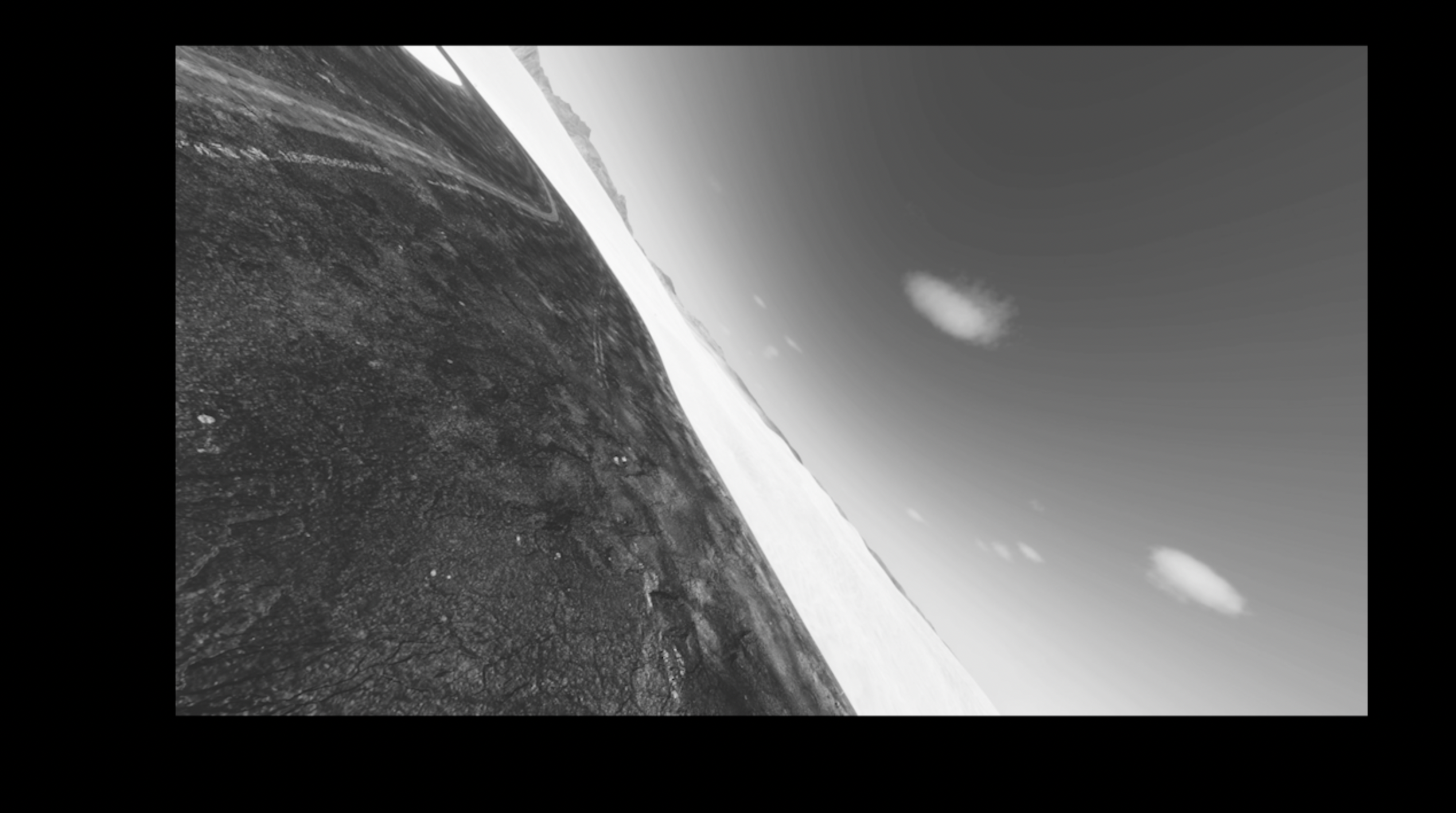
‘FLY ANGEL SOUL’ introduces us to a groundbreaking narrative approach through three distinct eponymous virtual cameras: fly, angel and soul, each offering a unique perspective. This isn’t traditional cinema; it’s a journey into the uncharted territory of computer-encoded viewpoints and the unscripted depths of the human heart. The ‘soul cam,’ masterfully embodied by Clémence Debaig, a choreographer, dancer, and creative technologist, who “plays” the role of Sebastian’s mother, acts as a cinematic avatar, allowing viewers to actively participate in the narrative., as she navigates a world where past and present intertwine.
With FLY ANGEL SOUL, we utilize virtual production methods to radically alter the process of filmmaking. Here, liveness rests as much in how Debaig responded to the mis-en-scene (spatial sound, captured performance, architecture, lighting, and objects) as it changed in real-time as in the actors’ performance (captured prior to filming with volumetric video). This sense of liveness is augmented by Jarrah Gurrie’s dynamic editing.
Soul Cam scene 2
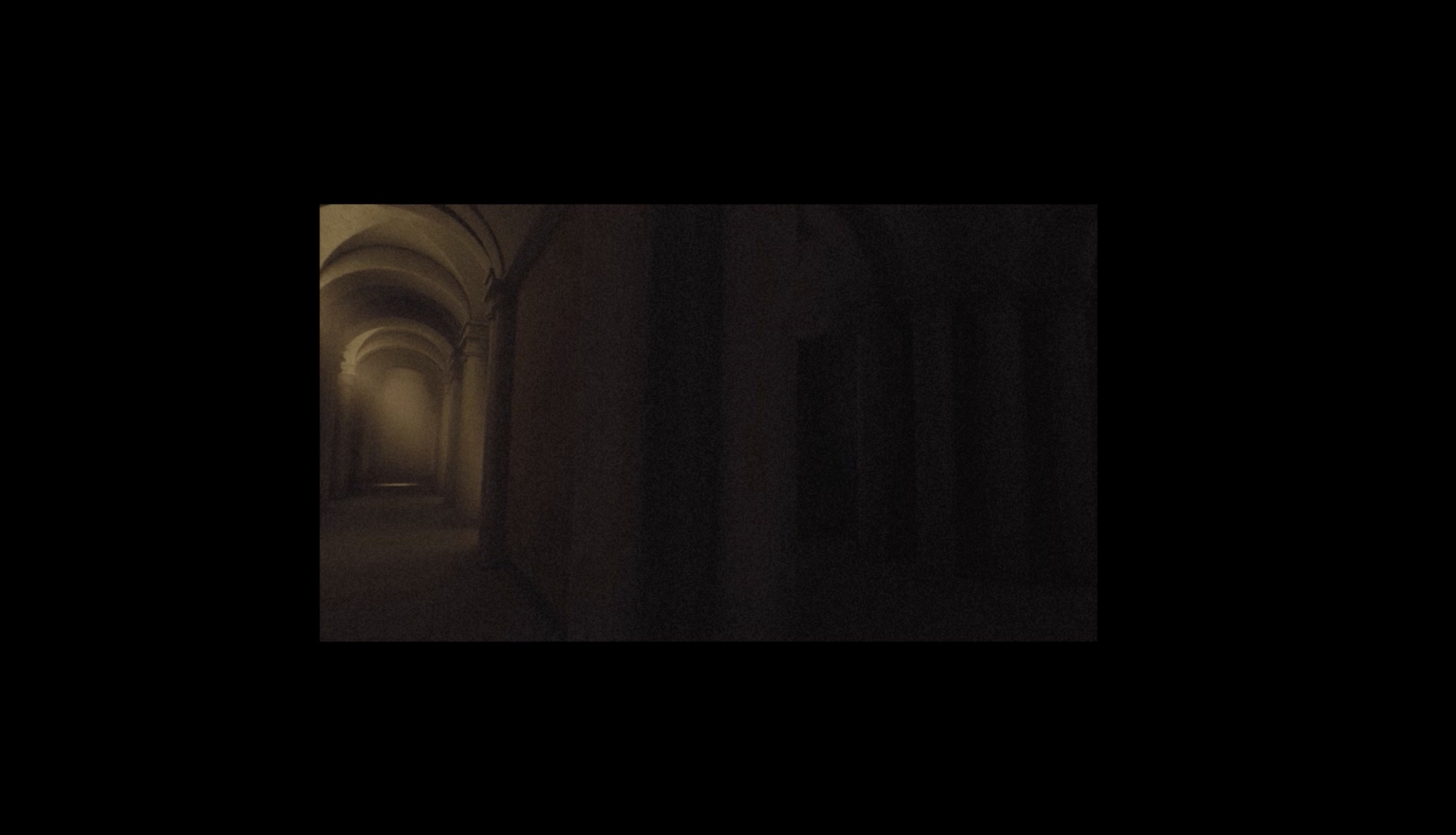
Soul Cam perspective Scene 1
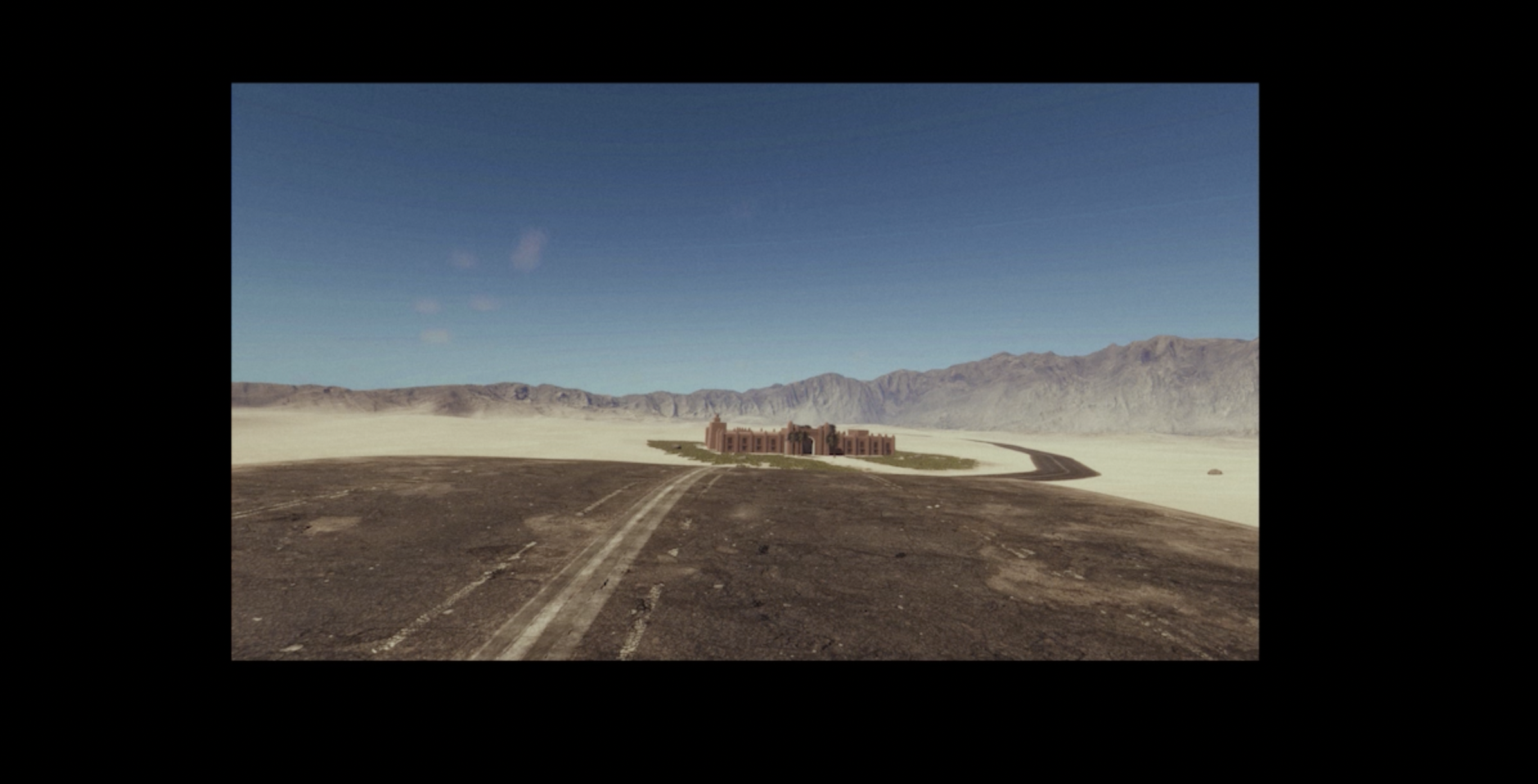
Incorporating an immersive first-person perspective and weaving in audio monologues drawn from Sebastian’s fragmented diary entries and those who shared his life, viewers are not just spectators but integral participants in the narrative. Together, yet maintaining our individual viewpoints, we delve into the themes of human suffering, love, and faith. Meticulously designed scenes guide us through a dynamic journey, shifting from expansive computer-generated landscapes to intricately hand-painted cathedral-like interiors. These transitions parallel Sebastian’s impending diagnosis and the consequent erosion of his freedom, mirroring our own progression from discovery to intimate engagement.
Fly cam perspective Scene 1
In a pivotal moment, The Doctor challenges Sebastian’s self-condemning logic, setting the stage for a powerful transformation. As our story culminates, an initially imposing interior yields to the embrace of nature. The sun’s harsh glare softens into a starlit night sky, symbolizing both Sebastian’s realization that he, too, is worthy of love and the realization of his mother’s provocative assertion that her son has “returned to God.”
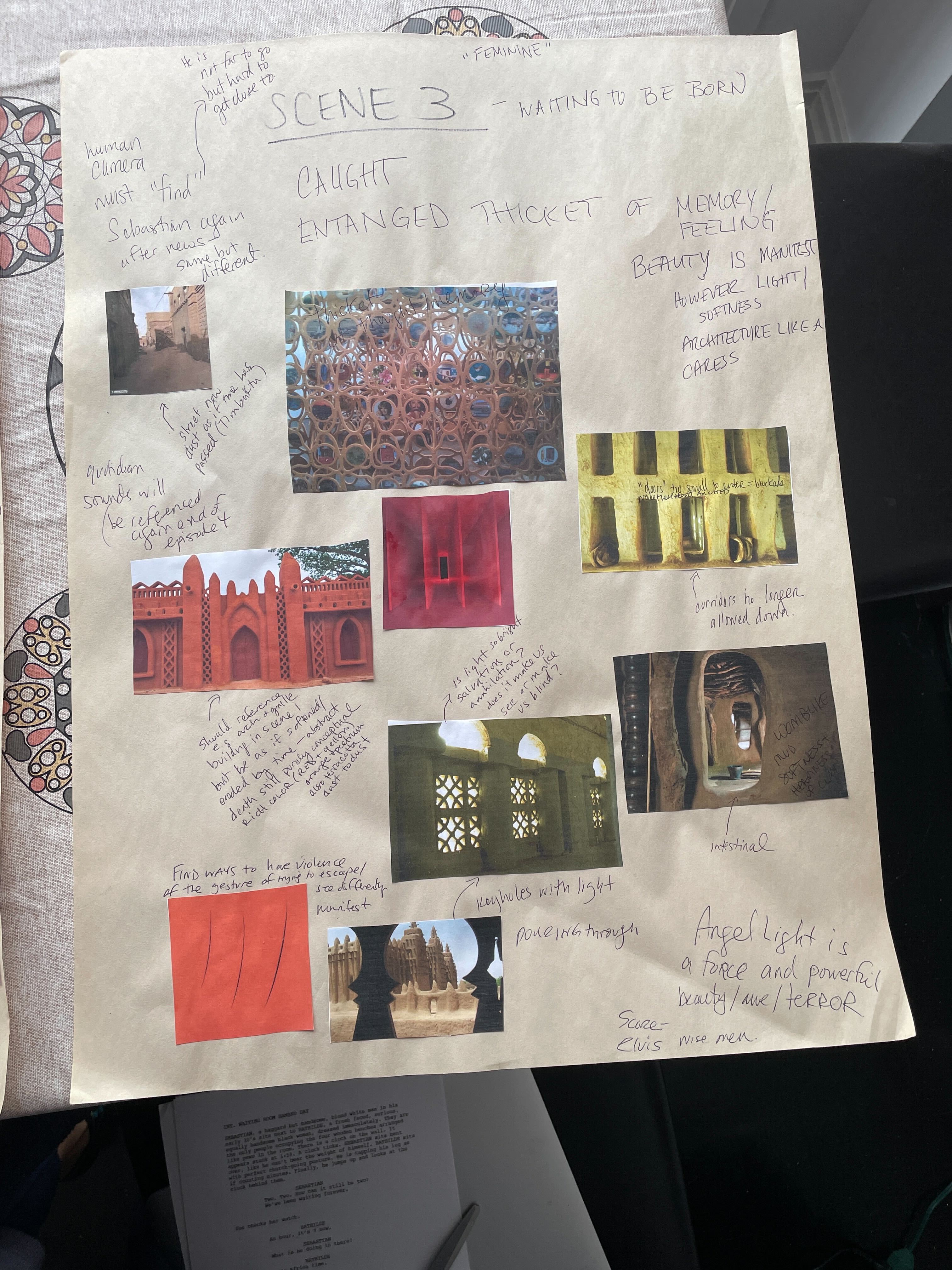
The “windows” we used for viewing in our In My Own Skin virtual installation, morph into the decorative grille/grids of Malian architecture (where the film takes place)
FAS tells the story of Sebastian, a young gay physician, estranged from his rural Catholic Missouri family, who, having moved to Mali to heal the sick, is diagnosed with AIDS. Inspired by a quote from Meister Eckhart that we might “rejoice in the everlasting truth in which the highest angel and the soul and the fly are equal,” FAS will be created using Unity’s Cinemachine software with three networked cameras adopting the p.o.v of the eponymous characters. What each camera “hears and sees and how each moves depends in part upon the actions of the other cameras in real time. The cameras function as the “players,” both in the video game sense and in a theatrical sense. The cameras’ real-time “performance” is the material for the 2D film. Thus, in FAS, “liveness” resides in the “embodied” cameras as much as in the actors whose performance is pre-recorded with volumetric video. Thus, the film, itself, is a poetic documentation of both human and computer machinations. Montage, as such, will not come through a post-production editing process, but occurs and becomes manifest as a result of the procedural logic of the game engine + the incommensurable logic of the human operator/performer. In keeping with Eckhart’s intent, the final film will display all the p.o.v’s on one screen, a tripartate montage of images and sounds, not created in post, but recorded “live” in real time.
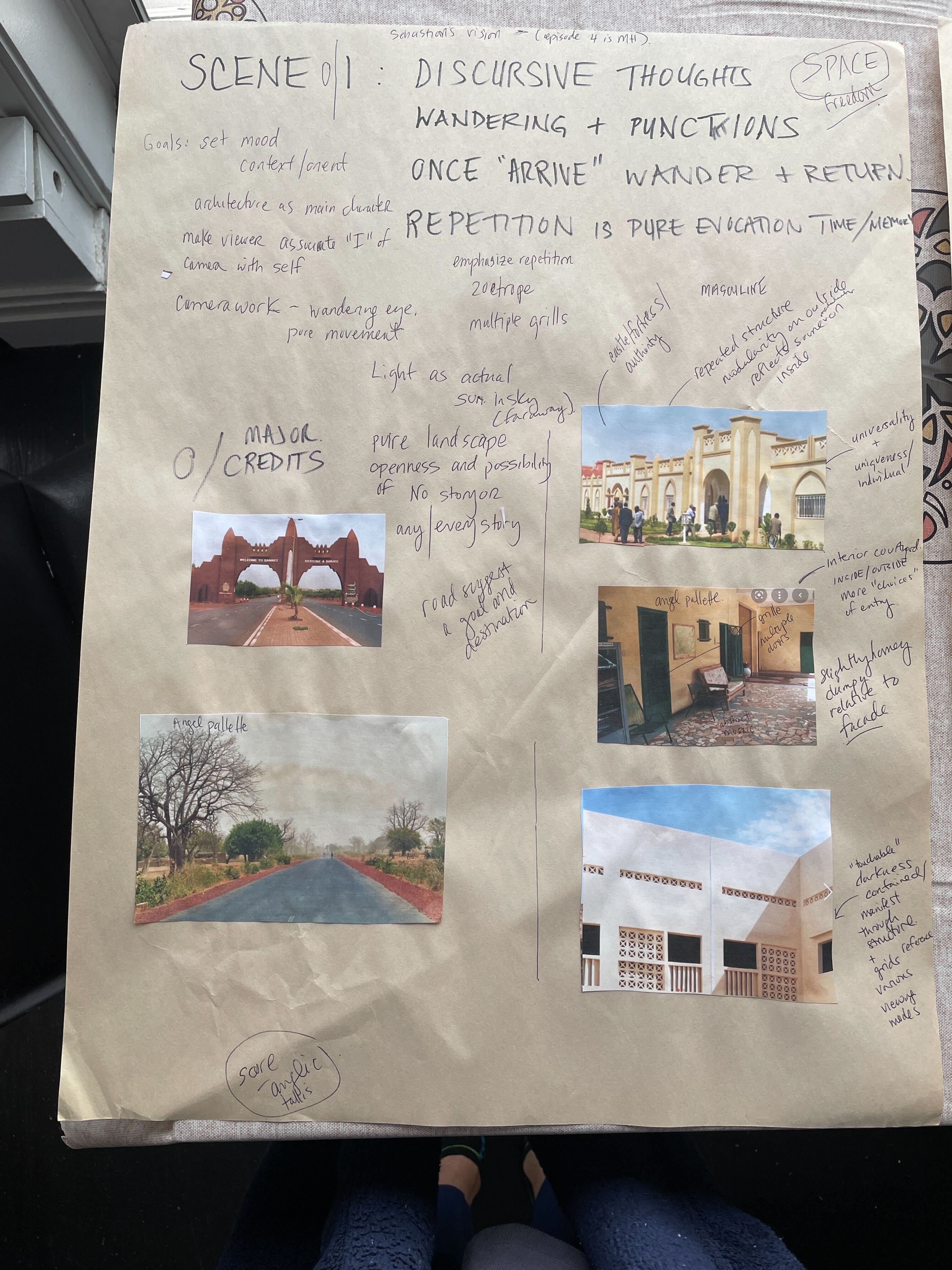
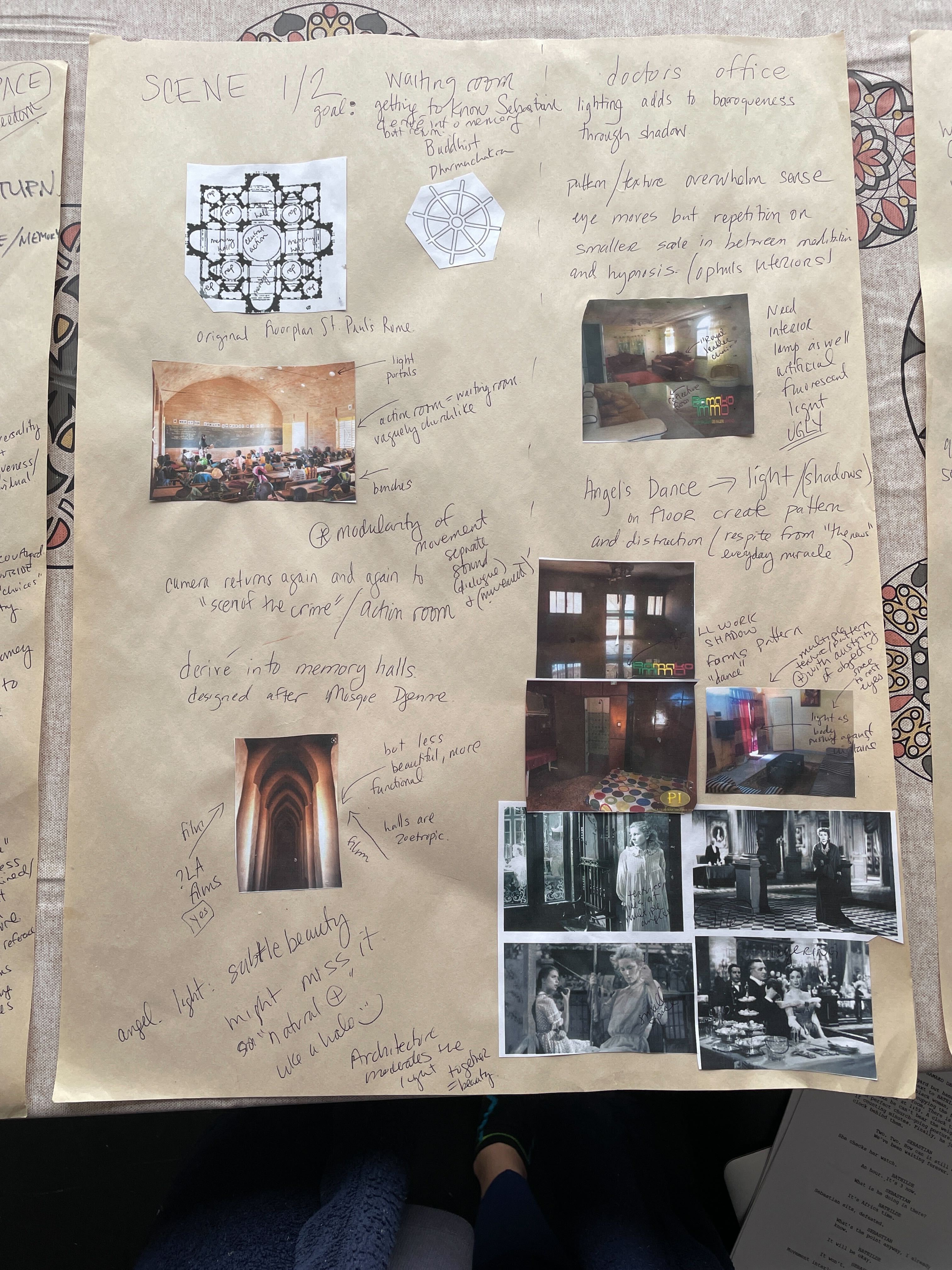
Even though we work with cutting edge technology, I start projects with paper and scissors and glue. Today, Cyril, who is now used to this came over to discuss what I’d come up with. (queerskins a novel queerskins.com began with a 100 page pile of collages that I showed Cyril at lunch one day. They were made on children’s colored construction paper as I’d work late at night after my two young kids were asleep and that was all I had available at the time I started.)
It’s wild to see how your mind builds on things–the delving into architecture and windows for viewing in our In My Own Skin project last year is taken up ten levels. In this project, architectural space and light actual become as integral to the film as the actors.
Ophuls is a major influence for the set in scene 2 (use of multiple patterns/textures/l) which find there real equivalent in contemporary Malian apartment rentals!
We will build a set based on radial forms –see the original plan for St. Peter’s Basilica in Rome above.
Other artists’ inspire–screens by Jorge Pardo and paintings/installation by Lucio Fontana. I
In the final scene, I note that the Angel which manifests to the human as light is powerful force inspiring awe and terror.. Cyril and I spent part of our time today discussing “how does an angel see?” So, I look for this brain worm, later and find it on my shelf in Rilke’s Duino Elegies
“Who, if I cried out, would hear me among the angelic orders? And, even if one of them pressed me suddenly to his heart: I’d be consume in his stronger existence. For beauty is nothing but the beginning of terror, which we can just barely endure, and we stand in awe of it as it coolly disdains to destroy us. Every angel is terrifying. ” So, I guess this has been living in my mind all these years, waiting to emerge!
Fly Angel Soul is a short experimental narrative film shot within virtual reality which explores the potential for virtual production techniques to expand two dimensional cinematic language. FAS tells the story of Sebastian, a young gay physician, estranged from his rural Catholic Missouri family, who, having moved to Mali to heal the sick, is diagnosed with AIDS. Inspired by a quote from Meister Eckhart that we might “rejoice in the everlasting truth in which the highest angel and the soul and the fly are equal,” FAS will be created using Unity’s Cinemachine software with three networked cameras adopting the p.o.v of the eponymous characters. What each camera “hears and sees and how each moves depends in part upon the actions of the other cameras in real time. These positions are not characters, per se. They function as aspects of Sebastian’s interior milieu. Although all three p.o.v. will be equally represented in the final film, using a split screen, FAS unapologetically privileges the ineffable workings of the human heart as the driving and unprogrammable logic of the film. The human camera is the only one operated by an actual living being. The angel and fly exist as state machine, pre-programmed virtual entities.
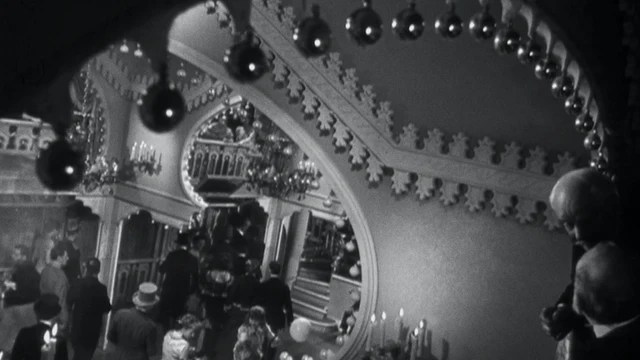
Looking to “embodied” films like Max Ophul’s Le Plaisir for inspiration
We are not advocating an impossible return to a pre-technical state of “nature”, rather, we are asking what suffering means in our technologically embedded existence.If as Jean-Luc Godard famously stated, “The tracking shots are a matter of morality,” the use of virtual cameras in agile film production brings up pressing ethical questions which have yet to be confronted. In FAS, a “simple” and universal story of human suffering–a diagnosis of terminal illness–AIDS at the beginning of the epidemic, invites viewers to contemplate how suffering is mediated using digital technologies. Our intent is to construct the film in a way that reasserts an embodied, participatory perspective, one that acknowledges the primacy of a “human” perspective while, at the same time, offering the audience alternative, perhaps transcendent computer-mediated ways of seeing, hearing and moving through the same story.
In FAS, all three cameras function as the “players,” both in the video game sense and in a theatrical sense. The cameras’ real-time “performance” is the material for the 2D film. Thus, in FAS, “liveness” resides in the “embodied” cameras as much as in the actors whose performance is pre-recorded with volumetric video. Thus, the film, itself, is a poetic documentation of both human and computer machinations. Montage, as such, will not come through a post-production editing process, but occurs and becomes manifest as a result of the procedural logic of the game engine + the incommensurable logic of the human operator/performer. In keeping with Eckhart’s intent, the final film will display all the p.o.v’s on one screen, a tripartite ever changing montage of images and sounds, not created in post, but recorded “live” in real time.
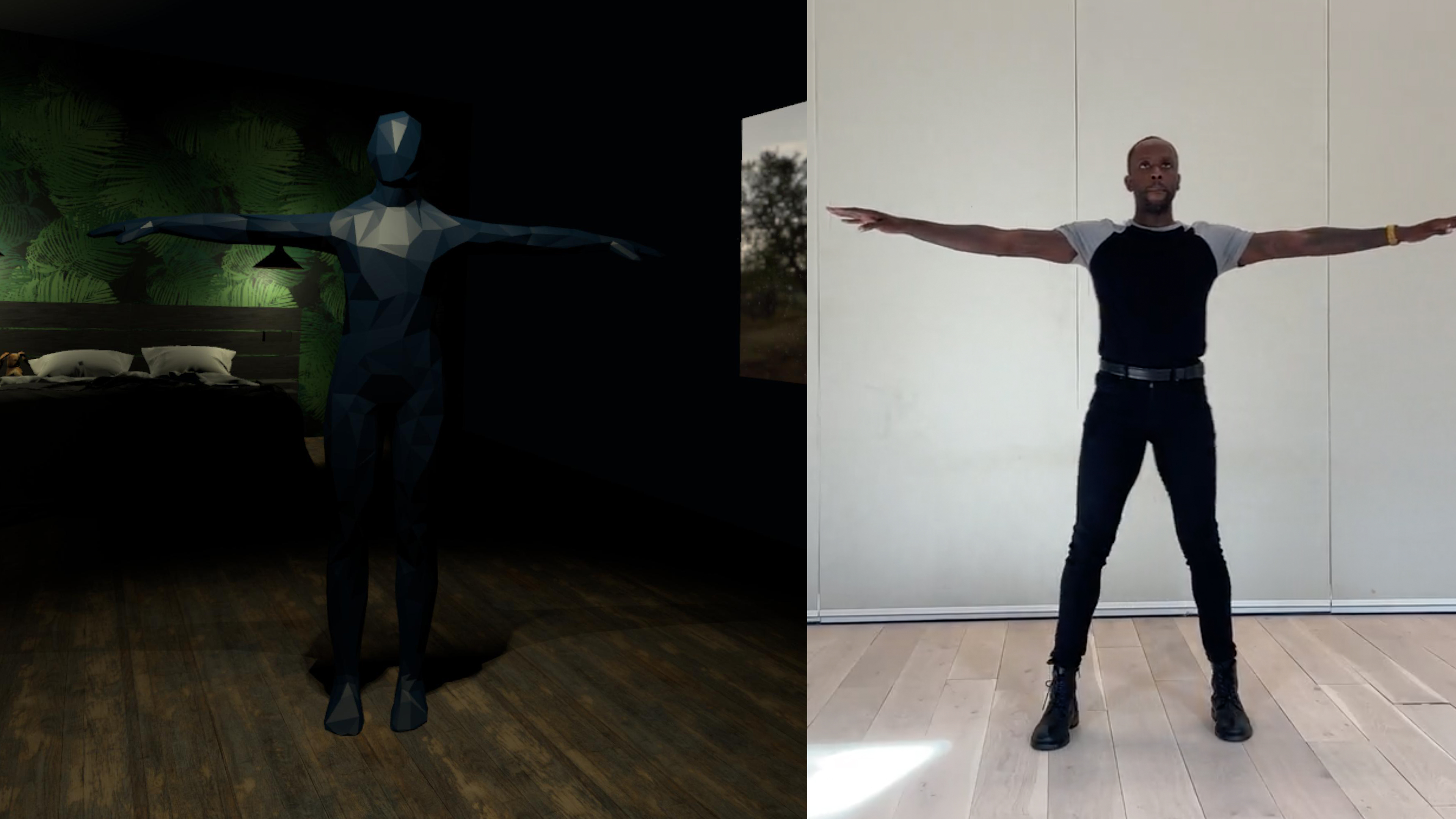
Raja’s performance translated to a VR avatar in Ordinary Gesture
We had the great pleasure of working with rising star Raja Feather Kelly to realize his first VR work Ordinary Gesture. For the first time, I had the opportunity to act as both creative producer and co-director for a work that was not my own, and I loved it. The team (Raja, Me, Cyril Tsiboulski working as Art and Technical Director and Lead Developer and Christoph Mateka doing Sound Design and Score composition) collaborated with an ease and respect and openness that nourished all of our creativity. Thanks to Artizen and the Oregon Shakespeare Festival who commissioned this work.
From Raja: “Ordinary Gesture is a Virtual Reality Theatrical experience that intersects theatre, meditation, and movement. The experience seeks to surrealize the experience of empathy by situating the player in 5 scenes that expand from their body to space-time (the universe) and back again. Inspired by the movies Magnolia, Melancholia, Waking Life, the poem You Are Never Ready by Nicole Blackman, and the writing of cultural anthropologist Ernest Becker, Ordinary Gesture asks the player to contemplate existence, suffering, compassion, and gesture as both ingredients to create theatre and a means to perhaps better understand empathy.”
We have plans to further develop this work and find additional venue/arts institution partners so that audiences outside of the VR festival world can experience these.
” Wonderful, especially drawing inspiration from Bergson, Lakoff & Johnson, Damasio, Baudrillard!” was one comment.
Also, Hilma af Klint, Sarah Ahmed, Jakob von Uexkull and Marshall McLuhan…Since I have no tech or art background, I feel free to draw on and seek inspiration from a range of sources. I really wish I could teach at the university level, but my M.D. doesn’t go far in academia and institutions are, often, unfortunately, very resistant to new ideas. The thing is, I love teaching and students really enjoy my style and mind (I taught narrative VR design at Independent Film Producers Center in NYC, the student clapped after almost every class…) So, if you are game, hit me up!
I’m going to post my slides and a draft of my paper (warning–this was not for publication, so expect spelling mistakes and grammatical errors) and eventually, I’m sure G4C will post the talk on YouTube. Thanks to all who attended. If you are free, please stop by the Expo (free, but you need to register https://www.gamesforchange.org )–I’ll be taking your questions from 11-12:30 tomorrow at the Queerskins: Ark virtual booth. And from 1:30 -2PM I will be in wild conversation with Queerskins’ actor Michael DeBartolo talking queerness, dance, VR, bodies and more. He’ll do some live readings from Sebastian’s diary, too. Join the conversation!
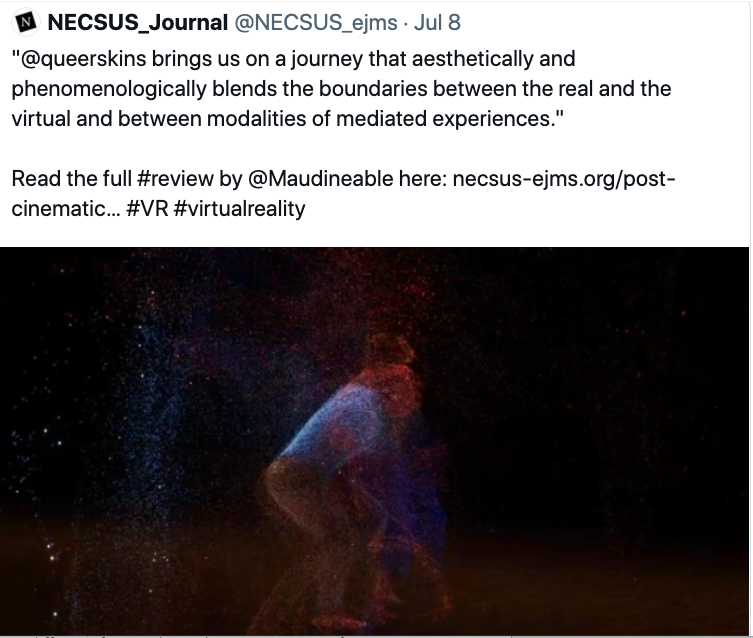
I’m also excited that Queerskins: ARK is garnering interest in academia! It’s really great when people think your work is important enough to actually do an in-depth analysis and publish a paper on it. Thank you!
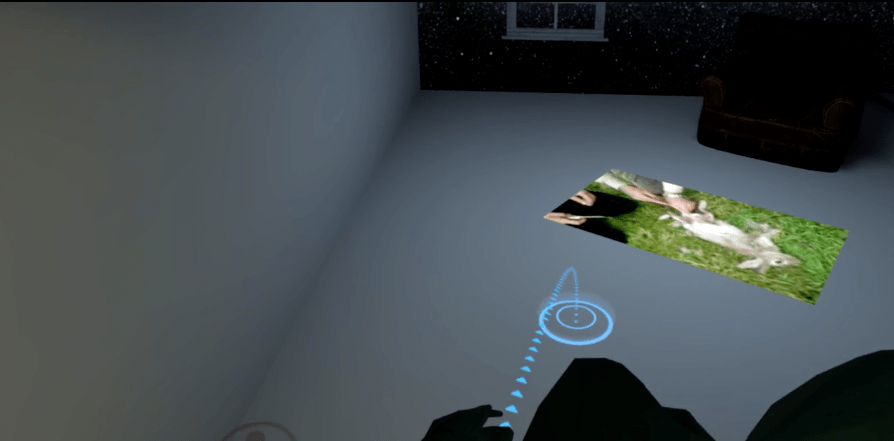
Welcome home. Queerskins Home is LIVE. World #83614 in VRChat. Search #queer. Part art exhibition space, part 3D explorable story world. Due to constraints of VRChat, a free massive player social app, available for Oculus Quest, all tethered VR headsets and online PC, we do not have video (as does not support for Quest) nevertheless, I see the future of cinema here. It is like nothing I have ever experienced.
Of all the things Cyril Tsiboulski and I have made over the last ten years, this feels perfect–raw and unfinished and a gut punch. I know “Art” is pretty and/or cerebral and/or conceptual, but that is not what we made. So proud of it. Amazing lighting help from Unity engineering superstar Elliott Mitchell and architectural advice from Beom Jun Kim, and, of course, Cyril Tsiboulski who is my wonder twin, and created this in 4 days. Working together and on this project for close to ten years is what makes it so deep and so powerful. It took that kind of devotion…Thank you all.
Audio is a big part of this so please adjust by going to your settings on the menu and adjusting master, world sounds and people (other avatars around you) sound. Starting September 2nd, in conjunction with the premiere of Queerskins: ARK at The Venice International Film Festival, I will be leading daily tours with special guests Michael DeBartolo (who plays Sebastian) in Queerskins: ARK and Hadley Boyd (who plays Mary-Helen, his mother). She will be reading live from Sebastian’s diary. So follow us at Queerskins and @queerskins on Insta/Twitter to find out the day’s schedule.
I contacted Jarrah through a short film website, we met for two hours in a coffee shop in Union Square. He was going to LA to work on editing a Hollywood film –I handed him a Flip video camera and told him “no narrative” –just put it in your pocket and film your life. (I wanted him to use a Flip because it had no zoom so the filmmaker’s body is ever present in the motion of the shot) Three months later–he sent me back these beautiful videos which represent Sebastian’s life in LA after leaving Missouri.
Pelin’s video of a man touching his chest has been a centerpiece of installation since Tribeca. I met this wonderful Turkish artist in 2007 and commissioned a hand-drawn animation for Reconstructing Mayakovsky.
VR Fest MX was fantastic–the level of intelligence and creative energy in Mexico City is incredible. Thanks to all for this opportunity.







 Illya Szilak